

Pomeranian
Pomeranian at a Glance

 How much exercise?Up to 30 minutes a day
Short walks and play.

 Do they shed?Some
Brush more than once a week.

 Monthly cost?Around $95 a month
A rough estimate.
 Fine in an apartment?Good fit
Happy in an apartment with daily walks.
How Big Is a Pomeranian, and What Colors Do They Come In?
Orange.
ShorterA male Pom's shoulders are 10.5 in below a coffee table.
| Adult size | ||
|---|---|---|
| Shoulder heightFloor to the top of the shoulders | 6–7 in | 6–7 in |
| WeightHealthy adult | 3–7 lb | 3–7 lb |
How Does a Pomeranian Change From Puppy to Adult?
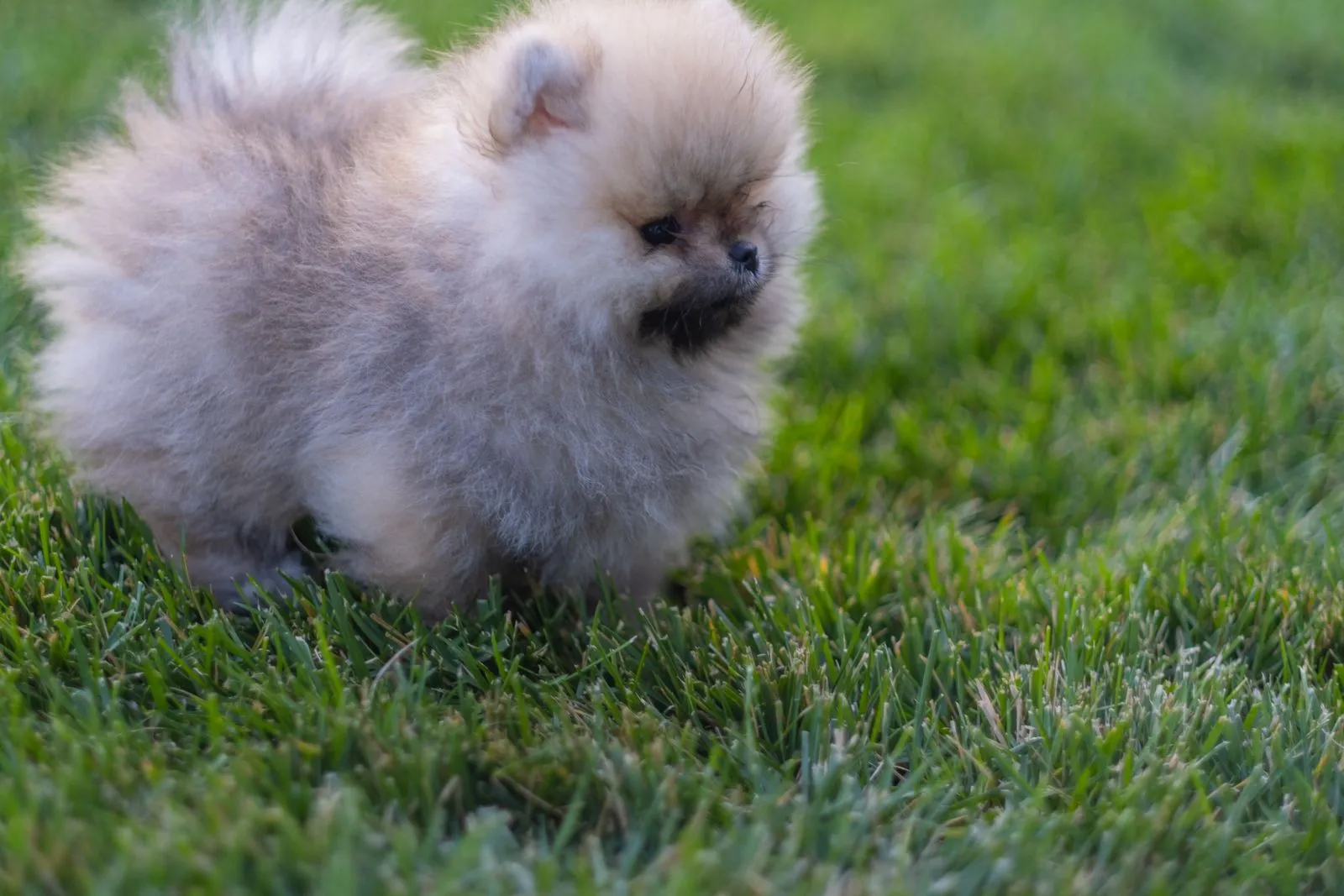
Vaccines, socializing and first training. Ask your vet for the schedule.
Senior (9+ yr): More frequent vet checks, joint and weight care, gentler exercise.
Photo credits
- Photo 1: Kateryna Babaieva (Pexels, free)
- Photo 2: Vanserline Vandenberg (Pexels, free)
- Photo 3: Jayce Q (Pexels, free)
- Photo 4: Anna Bondarenko (Pexels, free)
- Photo 5: Alexey Demidov (Pexels, free)
- Photo 6: Ricardo Pérez-Saravia (Pexels, free)
- Photo 7: Alexey Demidov (Pexels, free)
- Photo 8: Alexey Demidov (Pexels, free)
- Also on this page: Erwin Bosman (Pexels, free)
- Also on this page: Marik Elikishvili (Pexels, free)
- Also on this page: Anna Bondarenko (Pexels, free)
- Also on this page: Egor Komarov (Pexels, free)
- Life-stage photo (young): Ali Bensoula (Pexels, free)
What Is a Pomeranian Like to Live With?
Breed registries describe the Pomeranian as inquisitive, lively, bold, affectionate, alert, energetic, intelligent.
Good with children2.8/5 out of 5Mixed
A Pomeranian is tiny and delicate, so it scores a middling 2.8 out of 5 with kids. It does best with gentle older children who know how to handle a small dog, with supervision.
Gets on with other dogs2.8/5 out of 5Mixed
Pomeranians can be bold and may not realize how small they are. Some get along with other dogs, while others are bossy or wary, so early and ongoing socialization matters.
Affectionate with family5/5 out of 5Very affectionate
A Pomeranian is devoted to its people and wants to be with them all day. It scores 5 out of 5 for affection with family and is happiest on a lap.
Friendly with strangers3.2/5 out of 5Polite
Pomeranians are alert and often a little cautious with new people. Some warm up fast and others stay reserved, and early positive meetings help.
Energy3.2/5 out of 5Moderate
The Pomeranian is lively but small, with a moderate amount of energy. A few short walks and some play each day usually keep it happy.
Playfulness3/5 out of 5Playful at times
A Pomeranian enjoys play but is not a nonstop game fiend. It likes short bursts of fun, toys and attention from its people, then settles on a lap.
Mental stimulation needs3/5 out of 5Moderate
Pomeranians are bright and curious, and they enjoy a little mental work. A few training games, puzzle toys and new tricks each week keep them content.
Prey drive2.5/5 out of 5Some
A Pomeranian has some chase instinct, but it is not strong. Small animals and moving things may catch its eye, so keep it on a leash outdoors.
Barking4.4/5 out of 5Barks quite a lot
Pomeranians are very vocal. They bark at sounds, visitors and anything unusual, and they score 4.4 out of 5 for barking. Early training in a quiet cue helps.
Trainability3/5 out of 5Learns steadily
A Pomeranian is clever and can learn quickly, but it can also be stubborn and distracted. Short, upbeat sessions with treats work best, and housetraining may take patience.
Adaptability4/5 out of 5Adapts well
Pomeranians are small and adjust well to different homes and routines, including apartments and busy households, as long as they get company, attention and gentle daily exercise.
Mouthiness2/5 out of 5Mouths a little
A Pomeranian is not a mouthy dog. It may nibble in play as a puppy, but it does not have a strong urge to grab or carry things.
Watchdog instinct4/5 out of 5Watchful
Small but alert, a Pomeranian is quick to bark when someone arrives or something sounds odd. It makes a good alarm, though it is not a guard.
Copes with being alone1/5 out of 5Needs company
A Pomeranian bonds tightly and does not like being left. It scores 1 out of 5 for coping alone, so it needs company and gradual practice with short absences.
Suits apartment living4/5 out of 5Good fit
Small, quiet-footed and happy with short walks, a Pomeranian suits an apartment well. Its barking is the main issue, so work on it early to keep neighbors happy.
Good for first-time owners4/5 out of 5Good for beginners
A Pomeranian is small, adaptable and eager to please, which makes it a friendly choice for a first-time owner. Be ready for barking, grooming and gentle handling.
Copes with heat2.5/5 out of 5Fair
A Pomeranian's thick double coat holds in warmth, and its small size does not make heat easy. Keep it cool and shaded, and avoid exercise in hot weather.
Copes with cold3.5/5 out of 5Good
The fluffy double coat gives some protection from cold, and a Pomeranian copes fairly well. Its tiny size means it can still chill quickly, so limit time outdoors in harsh weather.
Grooming needs3.3/5 out of 5Moderate
The abundant double coat needs brushing more than once a week to prevent tangles and mats. It does not need heavy trimming, but regular care matters.
Shedding3.3/5 out of 5Some
A Pomeranian sheds a moderate amount through the year, and more when the undercoat comes out in seasonal changes. Regular brushing keeps loose hair in check.
Drooling1/5 out of 5Barely drools
Pomeranians do not drool. Their lips are tight, so slobber is not an issue.
Scores run from 1 to 5 and are the average of several breed libraries. The dark tick on each bar is the average dog. Individual dogs vary.
Is a Pomeranian Right for You?
Pomeranian Compared With Similar Breeds
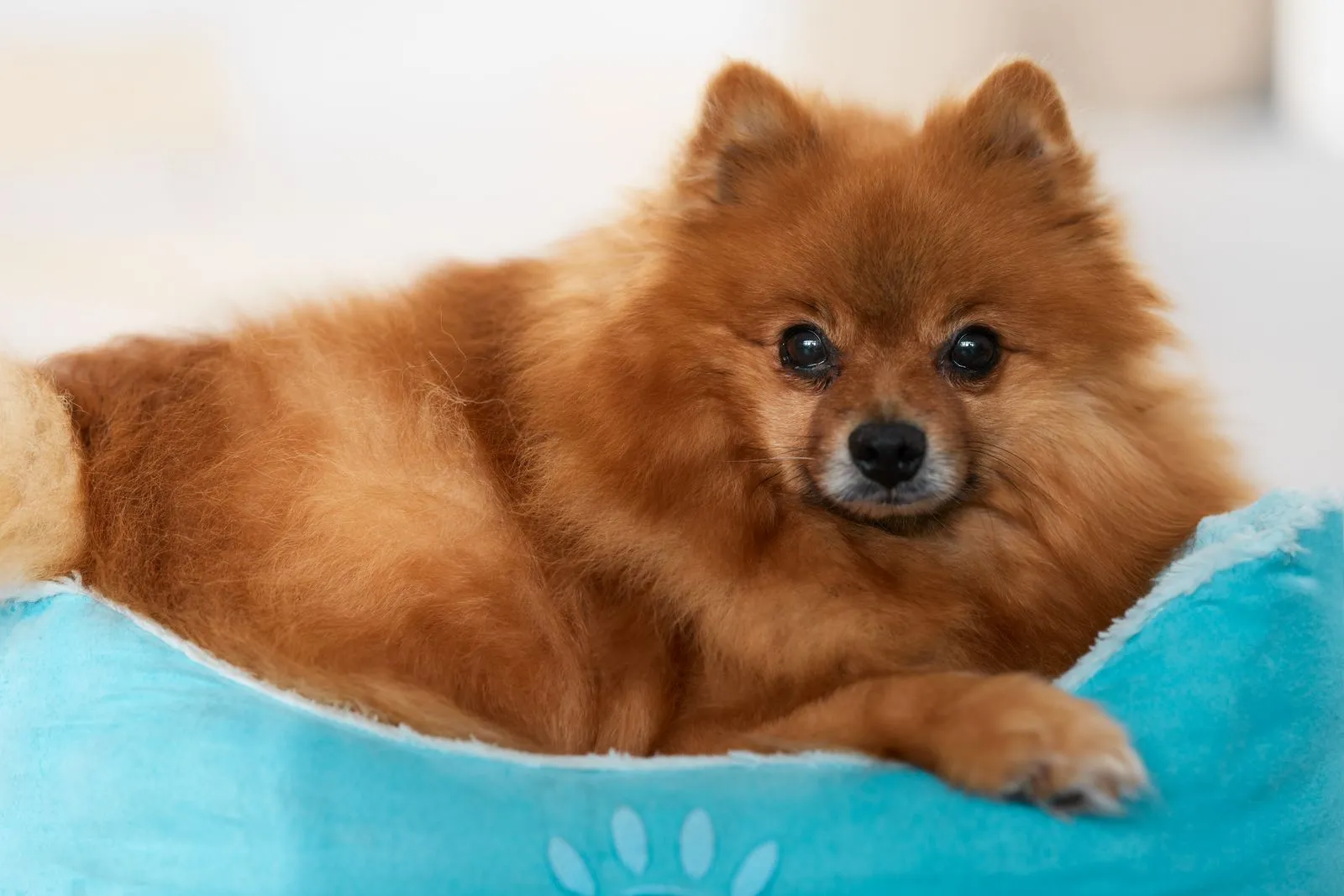
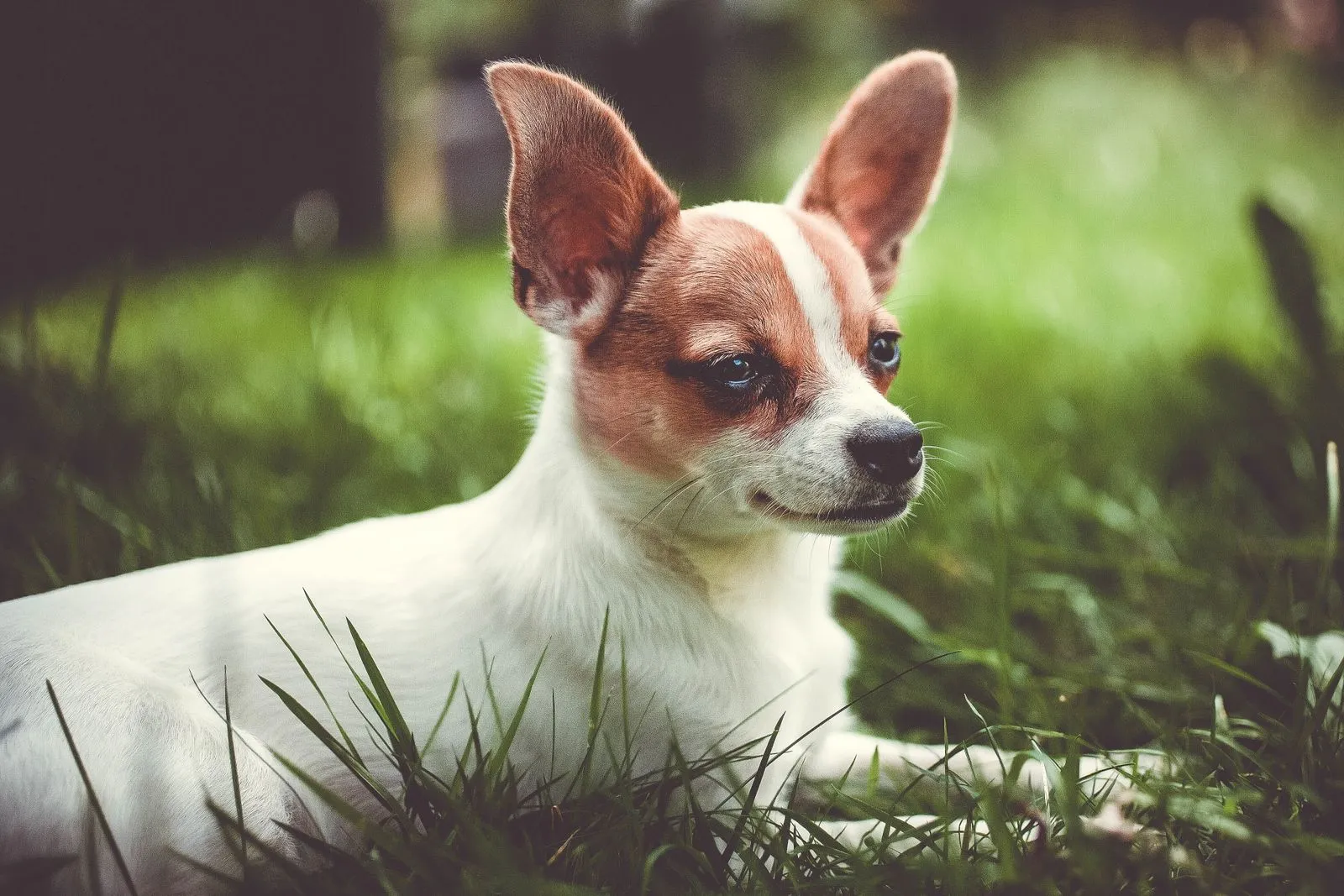
“Check first” means ask the breeder about it before you buy.
What Health Problems Do Pomeranians Get?
Ask for hip and kneecap scores for both parents.
Joints are the big one for Pomeranians.
How Much Care Does a Pomeranian Need?
How Much Does a Pomeranian Cost?
A rough monthly cost for a Pomeranian
These are rough estimates. Your own costs will vary.
About $1,140 a year ($2,170 the first year, $1,030 of it to get started), roughly $14,700 over about 12 years.

Puppy price
Paid once, to a breederWhat the monthly figure covers
5 costs, about $95 a month
What the monthly figure covers
5 costs, about $95 a monthThese are rough estimates. Some costs come every month. Others come a few times a year, or only when something wears out, so we average them out into one monthly figure.
| Item | What it is | A month | How often |
|---|---|---|---|
 Food | Based on an adult weight of about 5 lb, eating mainstream dry food. | About $8 | Every month |
 Flea, tick and heartworm | One chew a month that covers all three, at full shop price. Vet or generic brands can cost less. | About $34 | Every month |
 Poo bags and shampoo | Waste bags, shampoo and other everyday supplies. | About $2 | Most months |
 Vet visits and shots | A yearly check-up and booster shots, plus the odd extra trip. | About $48 | Once or twice a year |
 Toys and chews | Replaced as they wear out. | About $3 | As needed |
Other costs to plan for
6 costs, not in the monthly figure
Other costs to plan for
6 costs, not in the monthly figureThese are not in the monthly figure. Not every owner has them, and they vary a lot from dog to dog.
| Item | What it is | Rough cost | How often |
|---|---|---|---|
 Pet insurance | If you insure your dog. The US average for an accident and illness plan. | About $70 a month | Every month |
 Grooming | Poms have a coat that needs brushing more than once a week. Brush at home; many owners also book a groomer. | About $300 a year | A few times a year |
 Training classes | Puppy classes are popular. | About $200 in the first year | Mostly the first year |
 Boarding or a dog sitter | For when you travel without your dog. | About $53 a night | When you are away |
 Dog license | Many cities and counties ask for one. | About $15 a year | Once a year |
 Unexpected vet bills | An accident or illness. Insurance may cover some of it. | Varies a lot | Hard to predict |
Optional costs to consider
6 costs, only if you want or need them
Optional costs to consider
6 costs, only if you want or need themNice to have, or only if your dog needs them. Nothing here is in the monthly figure.
| Item | What it is | Rough cost |
|---|---|---|
| Professional teeth cleaning | Done under sedation at the vet. | About $390 |
 Dog walker or daycare | If you work long days. | Varies |
| Private training | One-to-one help with a hard habit. | Varies |
 Treats and chews | Training treats, dental chews. | Varies |
 Fence or dog-proofing | Gates, a fence, a car ramp or seat cover. | Varies |
 Knee or joint care | Poms are prone to a slipping kneecap (patellar luxation). Surgery is a major cost. Ask your vet for an estimate. | Only if needed |
What to Buy for a Pomeranian
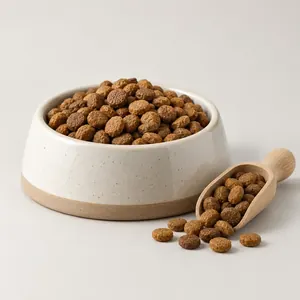
Adults weigh 3–7 lb, so choose a food made for toy and small breeds.
Look for
Made for toy and small breedsAdults weigh 3–7 lb.
Complete and balancedCheck the label for your dog's life stage.
The right age groupPuppy, adult or senior.
Watch out for
Switching food too fastChange over 7 to 10 days.
Guessing portionsMeasure each meal and ask your vet about a healthy weight.
Treats adding upCount them as part of the day's food.
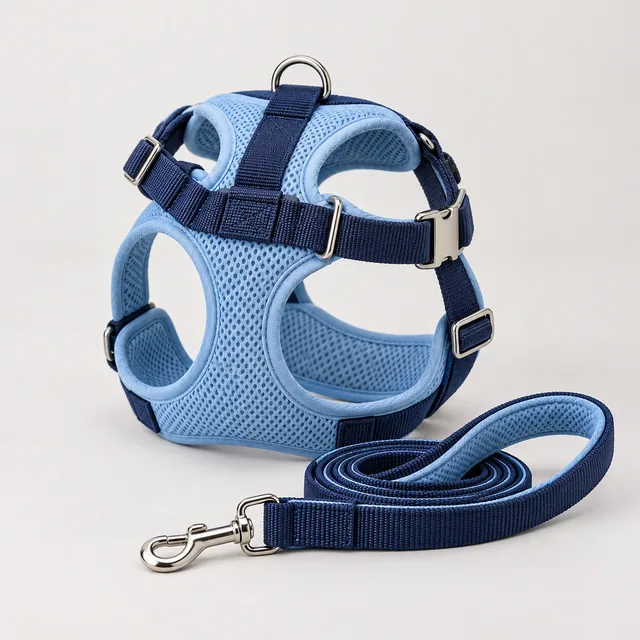
They need up to 30 minutes of walks a day, so comfort matters.
Look for
Soft, breathable paddingComfortable for up to 30 minutes of walking.
A harness rather than a collarSmall necks are easier to hurt; a harness spreads the pull.
Reflective stripsUseful on early and late walks.
Watch out for
A tight fitYou should fit two fingers under the straps.
Relying on a front clipTraining still matters for pulling.
A puppy harness they outgrowPuppies grow fast. Check the fit often.
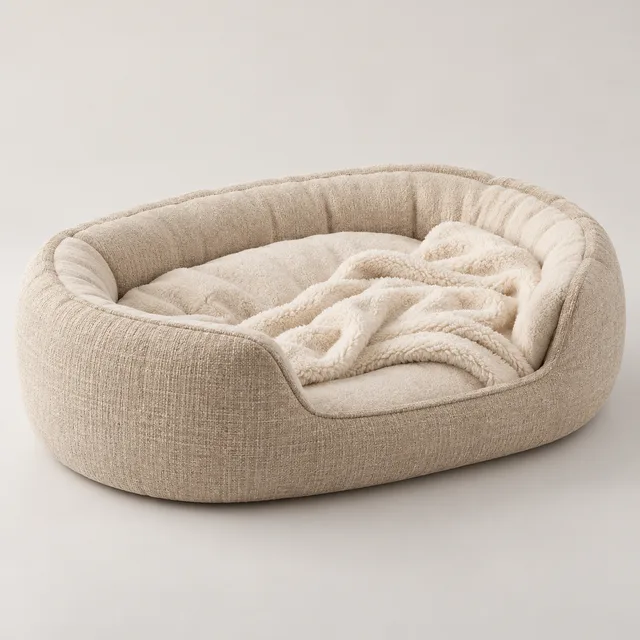
Big enough for a 3–7 lb adult to stand up and turn round.
Look for
Room to stand and turn roundFor a 3–7 lb adult.
Firm, supportive foamEasier on joints.
A removable coverOne you can take off and wash.
Watch out for
A puppy crate they outgrowA divider helps.
ChewingTake away anything they pull apart.
A soft bed that sagsFirm foam is easier on joints.
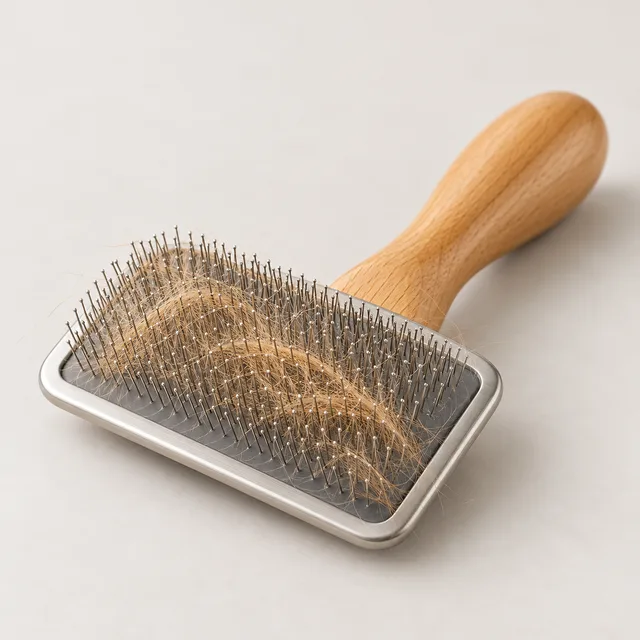
The coat needs brushing more than once a week.
Look for
A slicker brushFor everyday use.
A rakeFor shedding season.
A comfortable handleOne that feels good in your hand.
Watch out for
Pressing hardUse light strokes.
Long sessions at firstKeep them short and calm, with treats.
Skipping weeksBrush more than once a week, more when the coat tangles.
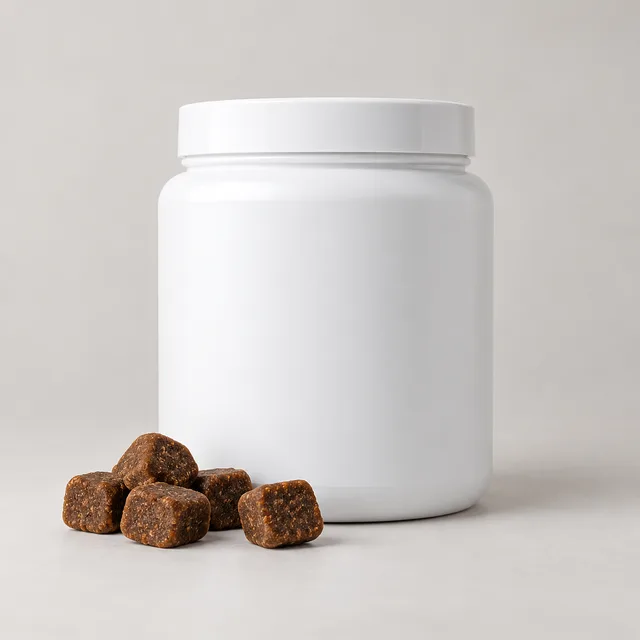
kneecaps is the main check. Ask your vet first.
Look for
Your vet's adviceOn what, if anything, your dog needs.
A full ingredient listAnd a quality seal.
The label doseFor a 3–7 lb dog.
Watch out for
Joint-care claimsThe evidence is mixed.
Human supplementsNever give them unless your vet says so.
Buying before you askYour vet can say what, if anything, your dog needs.
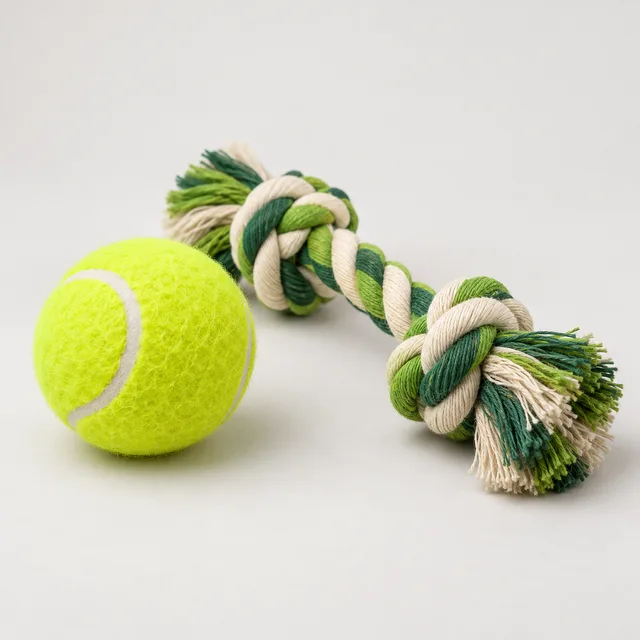
Small mouths, so light toys sized for a 3–7 lb dog suit them.
Look for
Light, small toysEasy to carry and shake.
The right sizeToo big to swallow.
Soft puzzle toysHide a treat or two inside.
Watch out for
Cracks and loose piecesThrow away worn toys.
Heavy chewingSoft toys will not last.
The same toy every dayKeep a few and swap them over to keep things interesting.
Where to Find a Pomeranian Puppy or Rescue
Pomeranians: breeders, rescues and shelters
Find breeders near you
Pomeranian breeders can list with Vet Your Pet, state by state. We have not checked these listings. For now, start with the parent club, the first stop for breeder referrals.
Listed breeders (not checked) near these cities name this breed:
- Austin (4)
- Tampa (3)
- Fort Worth (3)
- Dallas (3)
- San Antonio (3)
- Philadelphia (2)
- Atlanta (2)
- Houston (1)
- Nashville (1)
- Portland (1)
- Chicago (1)
- Denver (1)
- Tucson (1)
- Charlotte (1)
Rescue listings
Pomeranian rescues are not listed on Vet Your Pet yet. Many Pomeranians reach general shelters, so it is worth asking at your local one.
Shelter listings
Shelters are not listed on Vet Your Pet yet. General shelters do take in Pomeranians: call ahead and ask.
Across the 4 US cities we have shelter data for, 80.6% of dogs left the shelter alive.
Why ask?Hip and kneecap (patella) problems can mean pain and surgery later. Ask for OFA or PennHIP results, done at 24 months or older. Results can be looked up on the OFA website.
Why ask?Pomeranians can inherit eye disease and heart disease. The eye exam should be recent and done by a veterinary eye specialist, and the heart check by a heart specialist. A vet’s certificate is the proof, so ask to see it.
Why ask?A DNA test finds hidden genes for inherited disease, even in a parent that looks healthy. Tests listed for the Pomeranian include Legg-Calve-Perthes, congenital methemoglobinemia, degenerative myelopathy and gallbladder mucoceles. Ask which were done and see the lab results.
Why ask?How pups are raised matters. Meeting the mother and seeing their home shows whether the dogs are healthy, calm and well cared for.
Why ask?A contract puts the promises in writing: the health guarantee, what happens if a problem shows up, and what you each agree to.
Why ask?Many responsible breeders write a lifetime return clause into the contract, so a dog never ends up in a shelter. Ask to see it in writing, and ask if there are any limits.

Why it is a red flagHealth tests are the only proof the parents were checked. A breeder who hides them may be hiding problems that show up in the puppy later.
Why it is a red flagCareful breeders plan a few litters and keep a waiting list. Puppies always on hand usually means breeding for volume, with less care over health and temperament.
Why it is a red flagA good breeder lets you think, meet the dogs and read the contract first. Pressure to pay now is a common scam tactic.
Why it is a red flagYou should see where the pups were born and meet the mother. A parking lot or a puppy shipped unseen can hide poor conditions, or a scam.
Why it is a red flagPups learn bite control and social skills from their mother and littermates until about 8 weeks. Leaving earlier is linked to behavior and health problems.
Why it is a red flagColor does not change health or temperament. A “rare” price can mean a crossbreed or a breeder chasing profit.
What Are the Best-Known Pomeranian Mixes?
The Pomeranian Story
 The Pomeranian
A toy spitz from Pomerania, on the Baltic coast.
The Pomeranian descends from larger spitz dogs that pulled sleds and guarded livestock. It was bred smaller over the 1800s in Britain. Queen Victoria, a famous owner and breeder, helped make the breed fashionable.
- 1800sFirst bred in Germany and Poland
It descends from larger spitz dogs that pulled sleds and guarded livestock.
- 1888AKC recognizes it
Recognized by the American Kennel Club in 1888.
- 1888Queen Victoria's Marco
Queen Victoria brings home a Pomeranian called Marco from Italy. She goes on to breed and show Poms, and the breed becomes fashionable.
- 1891First Pomeranian club
Fans form the first Pomeranian club in England, and a breed standard follows soon after.
- 1912Titanic survivors
Only three dogs survive the sinking of the Titanic, and two of them are Pomeranians.
- 1914UKC recognizes it
Recognized by the United Kennel Club in 1914.
- 1988Westminster winner
Great Elms Prince Charming II becomes the first Pomeranian to win Best in Show at the Westminster dog show.
- TodayStill popular
Ranked #19 in the US.
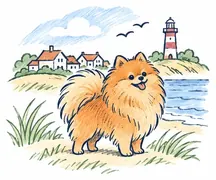

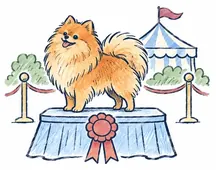

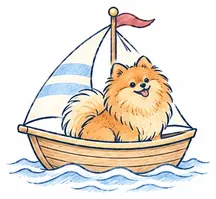
Famous Pomeranians





Popular names
In other languages
Pomeranian Questions
Most asked: 6 of 12 questions
No. Teacup is a marketing word, not a size: the Pomeranian is one breed, and a healthy adult weighs 3–7 lb. Dogs sold as teacup or mini are often just very small, and tiny dogs can have more health problems, including low blood sugar and a collapsing windpipe. Be wary of any breeder who promises a tiny adult.
See size and colorsPomeranians live about 12 years on average, and small dogs often live longer than big ones. Lifespan varies from dog to dog, and keeping a healthy weight, caring for the teeth and buying from a breeder who health-tests the parents all help. See the health section for what vets watch for.
See health in detailNo. Pomeranians have a thick double coat and shed a moderate amount, more when the undercoat comes out each season, so they are not a good pick for anyone with a dog allergy. No dog is truly allergy-free, because the allergens are in saliva and skin flakes as well as hair. Spend time with the breed first.
See careA puppy from a breeder costs about $850 to $3,100 (rough asking prices), then about $95 a month to keep, or $1,140 a year. Over about 12 years that comes to roughly $14,700. Food costs little for a tiny dog, but vet care does not, and very low prices can mean health tests were skipped.
See the full costYes, a fair amount. Pomeranians have a thick double coat that sheds a moderate amount through the year, and more when the undercoat comes out in seasonal changes. Brush more than once a week to prevent tangles and mats. Do not shave the coat, because it protects the skin.
See carePomeranians come from Pomerania, on the Baltic coast of Germany and Poland. They descend from larger spitz dogs that pulled sleds, herded and guarded livestock, and were bred smaller over the 1800s in Britain. Queen Victoria, a famous owner and breeder, helped make the small version fashionable. Today they are companion dogs.
Read the historyYes, for the right home. Pomeranians are affectionate, bold and alert, and they suit apartments and first-time owners. They also bark a lot, need regular brushing and hate being alone. They are lively and clever, and most are happiest as part of a household that is home for much of the day. Plan on company and daily grooming.
Is a Pomeranian right for you?Mostly because of barking and bossiness. Pomeranians are very vocal, and small dogs given less training can turn yappy or snappy. Calling a breed the worst is opinion, not fact, and no breed is aggressive by nature. Early socialization, a quiet cue and consistent, positive training matter far more than the breed.
See temperamentAdults stand 6–7 in tall and weigh 3–7 lb, so they are a true toy breed. Most are close to full size by about a year old, and the full coat can take longer to arrive. Puppies mature at different rates, so a dog a little ahead or behind is normal. Ask your vet if you are unsure.
See size and colorsFairly. Pomeranians are clever and can learn quickly, but they can also be stubborn and distracted, and the libraries we checked score trainability 3 out of 5. Short, upbeat sessions with treats work best. House-training can take patience, and an early quiet cue helps with barking.
See temperamentIt depends on the kids. Pomeranians are tiny and delicate, and the libraries we checked score them a middling 2.8 out of 5 with children. They do best with gentle older children who know how to handle a small dog, under adult supervision. Toddlers and rough play are a poor match.
Is a Pomeranian right for you?Slipping kneecaps are the problem to check first: Pomeranians are about 6 times as likely to have them as mixed-breed dogs. Ask the breeder for hip and kneecap scores for both parents, and a heart check, because heart valve disease is also listed for the breed. Ask your vet which checks suit your dog.
See health in detailNo question matchesTry another word, or look in the page sections above.
Where Our Pomeranian Facts Come From
A vet will review this page. Their name will appear here once they have checked it.
Health information here is general and does not replace a visit to your own vet.
Showing 8 of 41 sources · 11 with an open license
Cite only (© American Kennel Club). We quote facts and link back. We don’t copy their text. Published (date not shown, read in 2026). We used it in Quick answers.
Open the sourceCite only (© The Royal Kennel Club). We quote facts and link back. We don’t copy their text. Published (date not shown, read in 2026). We used it in Quick answers.
Open the sourceCite only (© United Kennel Club). We quote facts and link back. We don’t copy their text. Published (date not shown, read in 2026). We used it in Quick answers.
Open the sourceCite only (© FCI / country of origin). We quote facts and link back. We don’t copy their text. Published (date not shown, read in 2026). We used it in Quick answers.
Open the sourceCite only (© Canadian Kennel Club). We quote facts and link back. We don’t copy their text. Published (date not shown, read in 2026). We used it in Quick answers.
Open the sourceOpen license (CC BY 4.0). Free to reuse with credit. Published in 2013. We used it in Quick answers and History.
Open the sourceCite only (© The Royal Kennel Club). We quote facts and link back. We don’t copy their text. Published (date not shown, read in 2026). We used it in Quick answers and History.
Open the sourceCite only (American Kennel Club). We quote facts and link back. We don’t copy their text. Published in 2026. We used it in Quick answers and History.
Open the sourceCite only (© AKC). We quote facts and link back. We don’t copy their text. Published (date not shown, read in 2026). We used it in Quick answers.
Open the sourceOpen license (CC BY 4.0). Free to reuse with credit. Published in 2024. We used it in Quick answers.
Open the sourceOpen license (CC BY 4.0). Free to reuse with credit. Published in 2020. We used it in Temperament.
Open the sourceOpen license (CC BY 4.0). Free to reuse with credit. Published in 2021. We used it in Health.
Open the sourceCite only (BVA copyright). We quote facts and link back. We don’t copy their text. Published in 2025. We used it in Health and Finding a puppy.
Open the sourceCite only (© The Royal Kennel Club). We quote facts and link back. We don’t copy their text. Published in 2026. We used it in Health.
Open the sourceCite only (OMIA). We quote facts and link back. We don’t copy their text. Published (date not shown, read in 2026). We used it in Health.
Open the sourceCite only (© The Royal Kennel Club). We quote facts and link back. We don’t copy their text. Published (date not shown, read in 2026). We used it in Health and Finding a puppy.
Open the sourceCite only (CIDD © University of Prince Edward Island). We quote facts and link back. We don’t copy their text. Published (date not shown, read in 2026). We used it in Health and Finding a puppy.
Open the sourceOpen license (CC BY). Free to reuse with credit. Published in 2021. We used it in Health.
Open the sourceOpen license (CC BY). Free to reuse with credit. Published in 2025. We used it in Health.
Open the sourceOpen license (CC BY). Free to reuse with credit. Published in 2025. We used it in Health.
Open the sourceOpen license (CC BY). Free to reuse with credit. Published in 2025. We used it in Health.
Open the sourceOpen license (CC BY). Free to reuse with credit. Published in 2020. We used it in Health.
Open the sourceOpen license (CC BY 4.0). Free to reuse with credit. Published in 2017. We used it in Health.
Open the sourceCite only (© ASPCA). We quote facts and link back. We don’t copy their text. Published in 2021. We used it in Cost.
Open the sourceCite only (© NAPHIA). We quote facts and link back. We don’t copy their text. Published in 2026. We used it in Cost.
Open the sourceCite only (Breed parent club website). We quote facts and link back. We don’t copy their text. Published (date not shown, read in 2026). We used it in Finding a puppy.
Open the sourceCite only (© American Kennel Club). We quote facts and link back. We don’t copy their text. Published (date not shown, read in 2026). We used it in Finding a puppy.
Open the sourceOpen license (CC0). Free to reuse with credit. Published (date not shown, read in 2026). We used it in History.
Open the sourceCite only (© AVMA). We quote facts and link back. We don’t copy their text. Published in 2024. We used it in Cost.
Open the sourceCite only (© Petfood Industry). We quote facts and link back. We don’t copy their text. Published in 2026. We used it in Cost.
Open the sourceCite only (© AAHA). We quote facts and link back. We don’t copy their text. Published in 2021. We used it in Cost.
Open the sourceCite only (© Wag Labs). We quote facts and link back. We don’t copy their text. Published in 2026. We used it in Cost.
Open the sourceCite only (© Rover). We quote facts and link back. We don’t copy their text. Published in 2024. We used it in Cost.
Open the sourceCite only (© CareCredit). We quote facts and link back. We don’t copy their text. Published in 2025. We used it in Cost.
Open the sourceCite only (retail prices, read in Nov 2026). We quote facts and link back. We don’t copy their text. Prices read in 2026. We used it in Cost.
Open the sourceCite only (© City of Seattle). We quote facts and link back. We don’t copy their text. Read in 2026. We used it in Cost.
Open the sourceCite only (© Clatsop County). We quote facts and link back. We don’t copy their text. Read in 2026. We used it in Cost.
Open the sourceCite only (© City and County of Denver). We quote facts and link back. We don’t copy their text. Read in 2026. We used it in Cost.
Open the sourceCite only (© Maricopa County). We quote facts and link back. We don’t copy their text. Read in 2026. We used it in Cost.
Open the sourceCite only (© City of Austin). We quote facts and link back. We don’t copy their text. Read in 2026. We used it in Cost.
Open the sourceCite only (© Miami-Dade County). We quote facts and link back. We don’t copy their text. Read in 2026. We used it in Cost.
Open the sourcePhoto credits are listed under Photos.