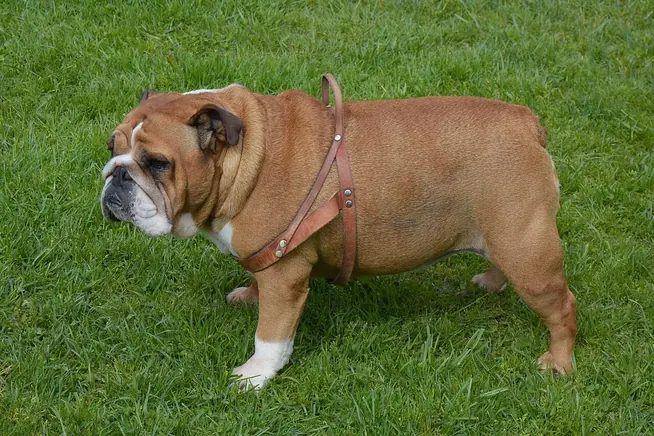

Bulldog
Bulldog at a Glance

 How much exercise?Up to an hour a day
A good walk plus play.
 Do they shed?Some
Brush once a week.

 Monthly cost?Around $139 a month
A rough estimate.
 Fine in an apartment?Great fit
Apartment living scores 5 out of 5.
How Big Is a Bulldog, and What Colors Do They Come In?
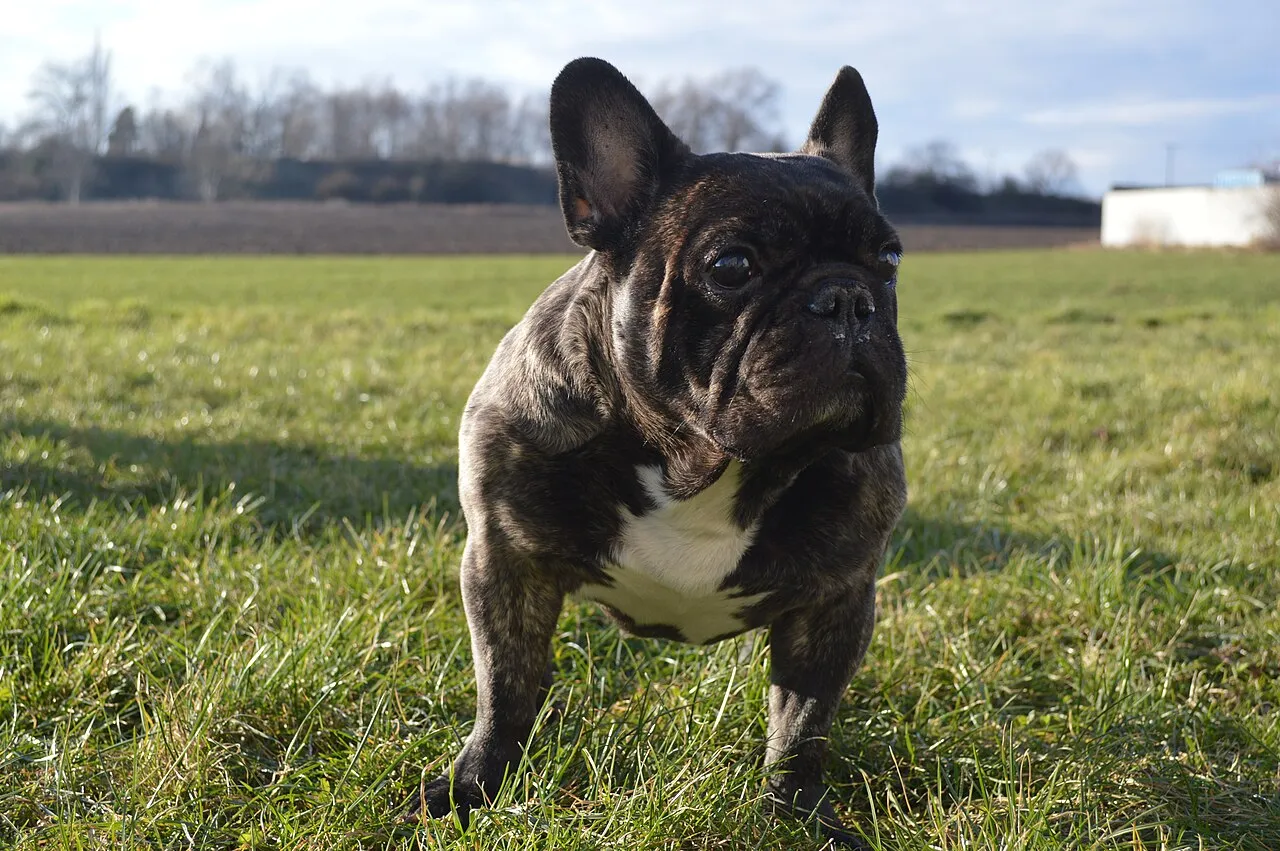
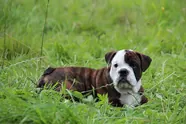
Red & White.
ShorterA male Bulldog's shoulders are 2.5 in below a coffee table.
| Adult size | ||
|---|---|---|
| Shoulder heightFloor to the top of the shoulders | 14–15 in | 14–15 in |
| WeightHealthy adult | 50–55 lb | 45–50 lb |
How Does a Bulldog Change From Puppy to Adult?
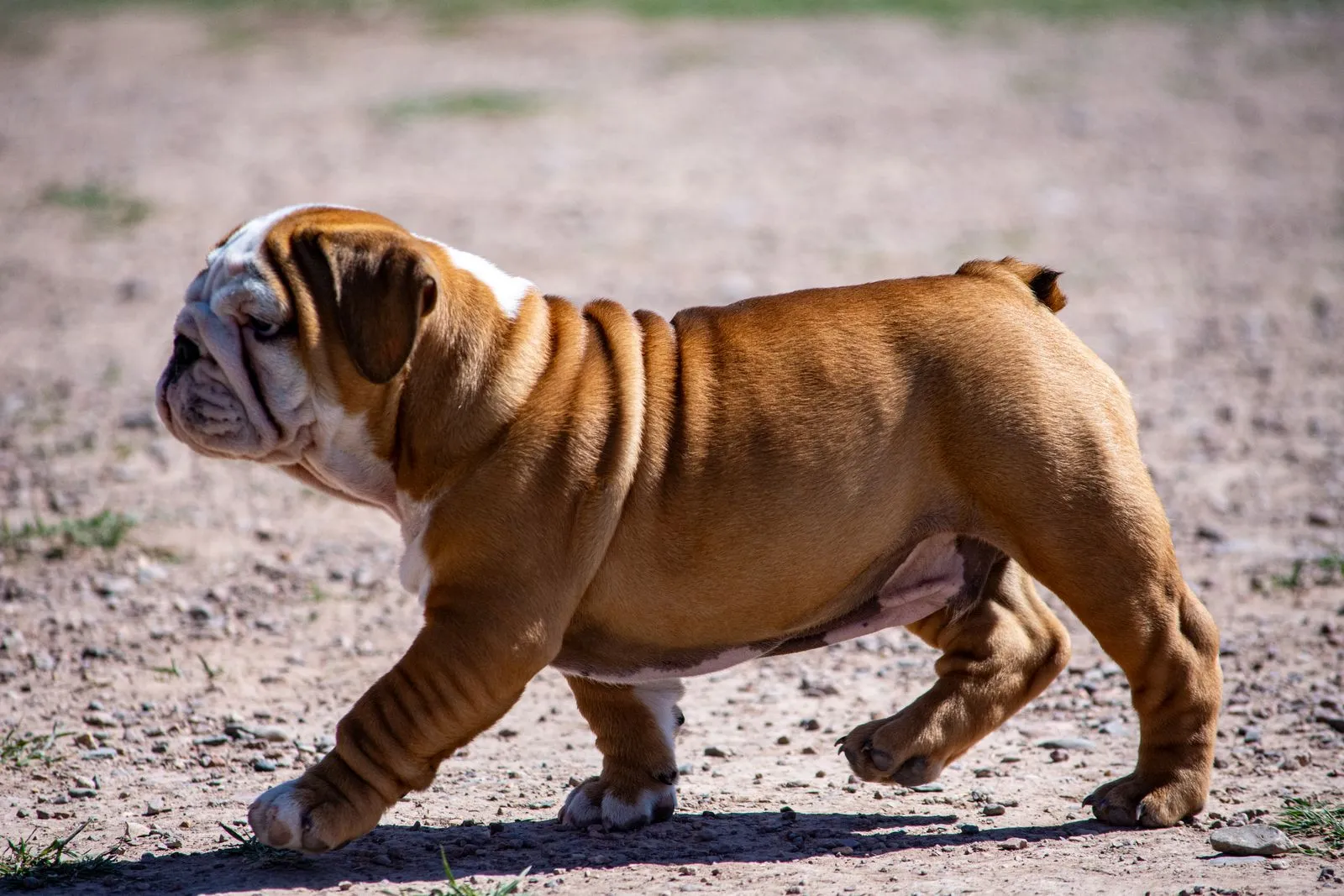
Vaccines, socializing and first training. Ask your vet for the schedule.
Senior (7+ yr): More frequent vet checks, joint and weight care, gentler exercise.
Photo credits
- Photo 1: Sarah Blocksidge (Pexels, free)
- Photo 2: Franco Monsalvo (Pexels, free)
- Photo 3: Andreas Schnabl (Pexels, free)
- Photo 4: Andrii Smuryhin (Pexels, free)
- Photo 5: Lua Bittencourt from Porto, Portugal (CC BY 2.0)
- Photo 6: Lua Bittencourt from Porto, Portugal (CC BY 2.0)
- Photo 7: Andreas Schnabl (Pexels, free)
- Photo 8: Lua Bittencourt from Porto, Portugal (CC BY 2.0)
- Also on this page: Joselodos (CC0)
- Also on this page: Camilo Ospina (Pexels, free)
- Also on this page: Franco Monsalvo (Pexels, free)
- Also on this page: 9Bubblé (CC BY 2.0)
- Life-stage photo (young): Franco Monsalvo (Pexels, free)
What Is a Bulldog Like to Live With?
Breed registries describe the Bulldog as friendly, courageous, calm, affectionate, alert, tenacious, dignified.
Good with children3.5/5 out of 5Good
Bulldogs are known for being sturdy and patient, and they score 3.5 out of 5 with kids. They are heavy and can be stubborn, so supervise play and teach children to respect them.
Gets on with other dogs2.5/5 out of 5Mixed
A Bulldog scores 2.5 out of 5 with other dogs. Some get along well, but others can be pushy or selective, so early socialization and careful introductions are a good idea.
Affectionate with family4.5/5 out of 5Very affectionate
Bulldogs are affectionate and devoted to their families, scoring 4.5 out of 5. They like to be close to their people, often leaning on them or sitting at their feet.
Friendly with strangers4.2/5 out of 5Friendly
Most Bulldogs are friendly and relaxed with new people, scoring 4.2 out of 5. They tend to greet visitors with calm curiosity rather than suspicion.
Energy2.4/5 out of 5Easygoing
Bulldogs are laid back and score only 2.4 out of 5 for energy. They enjoy a few short walks and some play, then prefer to relax and nap.
Playfulness4/5 out of 5Playful
Bulldogs can be goofy and playful in short bursts, scoring 4.0 out of 5. They enjoy games with their family, though they tire quickly and need breaks.
Mental stimulation needs3/5 out of 5Moderate
Bulldogs need a moderate amount of mental work. A little training, a few toys and daily time with their people are enough to keep them content.
Prey drive2/5 out of 5Low
Bulldogs have a low chase instinct, scoring 2.0 out of 5. They are rarely driven to run after small animals, though a leash outdoors is still wise.
Trainability3/5 out of 5Learns steadily
A Bulldog can learn well but is known for a stubborn streak. It scores a middle 3.0 out of 5, so use short, upbeat sessions with treats and plenty of patience.
Adaptability3/5 out of 5Adapts fairly well
Bulldogs adjust reasonably well to new routines, scoring a middle 3.0 out of 5. They like steady schedules and a comfortable home, and they do not enjoy sudden big changes.
Barking2.2/5 out of 5Barks a little
Bulldogs are not big barkers, scoring 2.2 out of 5. They may snort, snore or grunt more than they bark, and most keep quiet unless something is going on.
Mouthiness2/5 out of 5Mouths a little
Bulldogs are not especially mouthy, scoring 2.0 out of 5. Puppies will still chew as they grow, so give them good toys and teach gentle manners.
Watchdog instinct3/5 out of 5Alerts to visitors
A Bulldog may look tough, but it is a friendly companion. It will notice visitors but is not strongly protective, scoring a middle 3.0 out of 5.
Copes with heat1/5 out of 5Struggles
Bulldogs score only 1 out of 5 for heat. They overheat easily, so keep them in cool, shaded places on warm days and do not exercise them hard in the heat.
Copes with cold1/5 out of 5Struggles
The short coat gives a Bulldog little protection from the cold, so it scores just 1 out of 5. Keep winter outings short and consider a coat on cold days.
Drooling4/5 out of 5Drools quite a lot
Bulldogs have loose lips and jowls and tend to drool, especially after eating or drinking, scoring 4.0 out of 5. Keep a towel handy and expect some mess.
Copes with being alone3/5 out of 5A few hours
Bulldogs score a middle 3.0 out of 5 for being alone. They enjoy company and may fret during long stretches, so build up alone time slowly and avoid very long days.
Suits apartment living5/5 out of 5Great fit
A Bulldog is a calm, low-energy dog, so it suits apartment life well and scores 5 out of 5. Short walks and indoor play meet most of its exercise needs.
Good for first-time owners4/5 out of 5Good for beginners
Bulldogs are affectionate and easygoing, so they suit many first-time owners, scoring 4.0 out of 5. They can be stubborn, so be patient and keep training consistent.
Grooming needs2.3/5 out of 5Low
The short, smooth coat is simple to care for with a weekly brush, scoring 2.3 out of 5. Extra care is needed for facial folds, which should be kept clean and dry.
Shedding3.3/5 out of 5Some
A Bulldog sheds a moderate amount, scoring 3.3 out of 5. The short hairs are fine but they do show up on clothes and furniture.
Scores run from 1 to 5 and are the average of several breed libraries. The dark tick on each bar is the average dog. Individual dogs vary.
Is a Bulldog Right for You?
Bulldog Compared With Similar Breeds
“Check first” means ask the breeder about it before you buy.
What Health Problems Do Bulldogs Get?
Ask for breathing test results for both parents.
One breathing problem is on the “check first” list.
How Much Care Does a Bulldog Need?
How Much Does a Bulldog Cost?
A rough monthly cost for a Bulldog
These are rough estimates. Your own costs will vary.
About $1,670 a year ($2,700 the first year, $1,030 of it to get started), roughly $16,000 over about 9 years.

Puppy price
Paid once, to a breederWhat the monthly figure covers
5 costs, about $139 a month
What the monthly figure covers
5 costs, about $139 a monthThese are rough estimates. Some costs come every month. Others come a few times a year, or only when something wears out, so we average them out into one monthly figure.
| Item | What it is | A month | How often |
|---|---|---|---|
 Food | Based on an adult weight of about 50 lb, eating mainstream dry food. | About $47 | Every month |
 Flea, tick and heartworm | One chew a month that covers all three, at full shop price. Vet or generic brands can cost less. | About $39 | Every month |
 Poo bags and shampoo | Waste bags, shampoo and other everyday supplies. | About $2 | Most months |
 Vet visits and shots | A yearly check-up and booster shots, plus the odd extra trip. | About $48 | Once or twice a year |
 Toys and chews | Replaced as they wear out. | About $3 | As needed |
Other costs to plan for
6 costs, not in the monthly figure
Other costs to plan for
6 costs, not in the monthly figureThese are not in the monthly figure. Not every owner has them, and they vary a lot from dog to dog.
| Item | What it is | Rough cost | How often |
|---|---|---|---|
 Pet insurance | If you insure your dog. The US average for an accident and illness plan. | About $70 a month | Every month |
 Grooming | Bulldogs need brushing about once a week. Brush at home; some owners also book a groomer. | About $300 a year | A few times a year |
 Training classes | Puppy classes are popular. | About $200 in the first year | Mostly the first year |
 Boarding or a dog sitter | For when you travel without your dog. | About $53 a night | When you are away |
 Dog license | Many cities and counties ask for one. | About $15 a year | Once a year |
 Unexpected vet bills | An accident or illness. Insurance may cover some of it. | Varies a lot | Hard to predict |
Optional costs to consider
6 costs, only if you want or need them
Optional costs to consider
6 costs, only if you want or need themNice to have, or only if your dog needs them. Nothing here is in the monthly figure.
| Item | What it is | Rough cost |
|---|---|---|
| Professional teeth cleaning | Done under sedation at the vet. | About $390 |
 Dog walker or daycare | If you work long days. | Varies |
| Private training | One-to-one help with a hard habit. | Varies |
 Treats and chews | Training treats, dental chews. | Varies |
 Fence or dog-proofing | Gates, a fence, a car ramp or seat cover. | Varies |
 Hip or joint care | Bulldogs are prone to hip trouble. A hip operation is a major cost. Ask your vet for an estimate. | Only if needed |
What to Buy for a Bulldog

Adults weigh 45–55 lb, so choose a food made for medium breeds.
Look for
Made for medium breedsAdults weigh 45–55 lb.
Complete and balancedCheck the label for your dog's life stage.
The right age groupPuppy, adult or senior.
Watch out for
Switching food too fastChange over 7 to 10 days.
Guessing portionsMeasure each meal and ask your vet about a healthy weight.
Treats adding upCount them as part of the day's food.
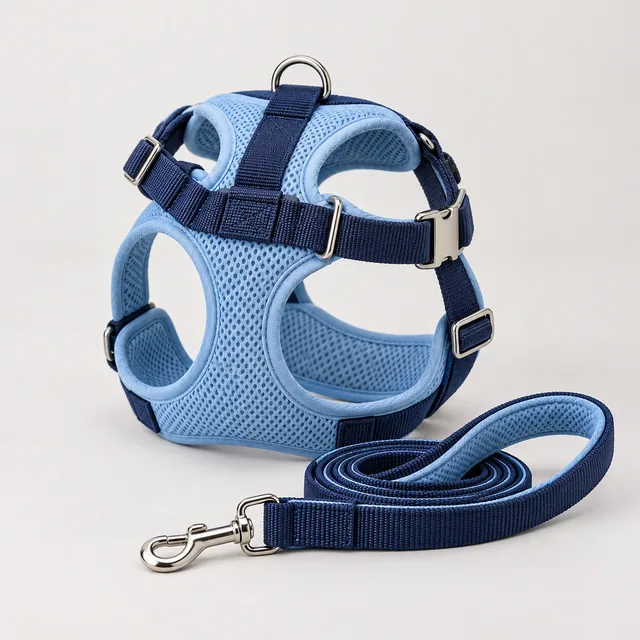
They need up to 1 hour of walks a day, so comfort matters.
Look for
Soft, breathable paddingComfortable for up to 1 hour of walking.
Adjustable strapsSo you can get a snug fit.
Reflective stripsUseful on early and late walks.
Watch out for
A tight fitYou should fit two fingers under the straps.
Relying on a front clipTraining still matters for pulling.
A puppy harness they outgrowPuppies grow fast. Check the fit often.

Big enough for a 45–55 lb adult to stand up and turn round.
Look for
Room to stand and turn roundFor a 45–55 lb adult.
Firm, supportive foamEasier on joints.
A removable coverOne you can take off and wash.
Watch out for
A puppy crate they outgrowA divider helps.
ChewingTake away anything they pull apart.
A soft bed that sagsFirm foam is easier on joints.
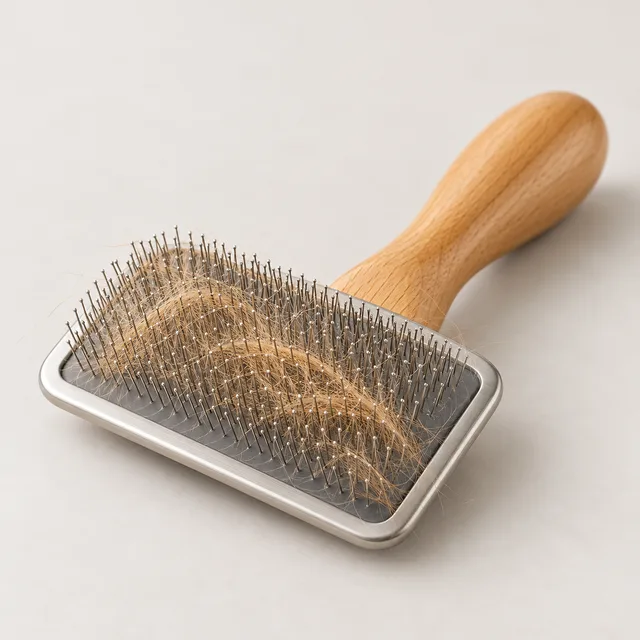
The coat needs brushing once a week.
Look for
A rubber grooming mittLifts loose hair from a short coat.
A rakeFor shedding season.
A comfortable handleOne that feels good in your hand.
Watch out for
Pressing hardUse light strokes.
Long sessions at firstKeep them short and calm, with treats.
Skipping weeksBrush once a week, more when the coat tangles.
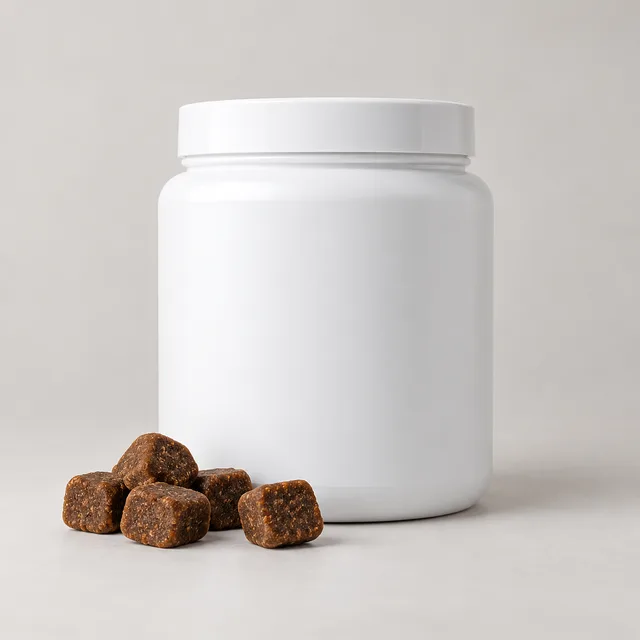
Hips is the main check. Ask your vet first.
Look for
Your vet's adviceOn what, if anything, your dog needs.
A full ingredient listAnd a quality seal.
The label doseFor a 45–55 lb dog.
Watch out for
Joint-care claimsThe evidence is mixed.
Human supplementsNever give them unless your vet says so.
Buying before you askYour vet can say what, if anything, your dog needs.
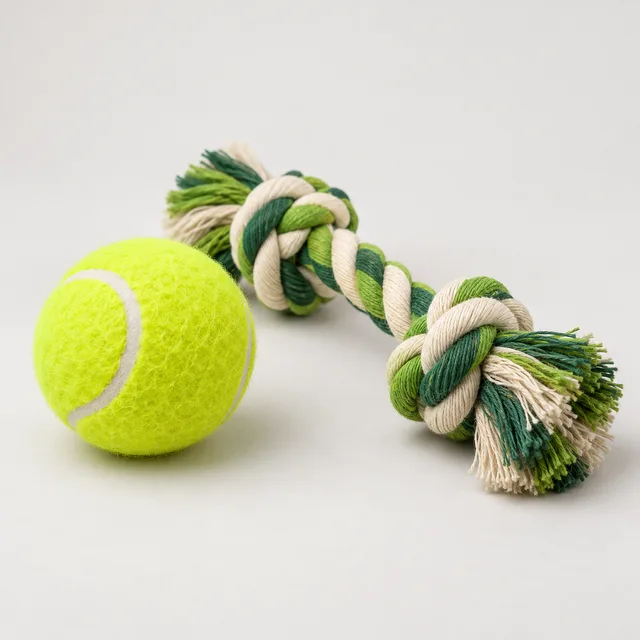
Bred to fetch, so retrieving toys suit them.
Look for
Retriever-style toysBalls, canvas dummies and floating toys.
The right sizeToo big to swallow.
Floating toysHandy if they will swim.
Watch out for
Cracks and loose piecesThrow away worn toys.
Heavy chewingSoft toys will not last.
The same toy every dayKeep a few and swap them over to keep things interesting.
Where to Find a Bulldog Puppy or Rescue
Bulldogs: breeders, rescues and shelters
Find breeders near you
Bulldog breeders can list with Vet Your Pet, state by state. We have not checked these listings. For now, start with the parent club, the first stop for breeder referrals.
Listed breeders (not checked) near these cities name this breed:
- Atlanta (7)
- Chicago (5)
- Colorado Springs (4)
- Fort Worth (4)
- Dallas (4)
- Cincinnati (3)
- Denver (3)
- Philadelphia (3)
- Las Vegas (2)
- San Antonio (2)
- Tampa (1)
- Nashville (1)
- Houston (1)
- Austin (1)
Rescue listings
Bulldog rescues are not listed on Vet Your Pet yet. Many Bulldogs reach general shelters, so it is worth asking at your local one.
Shelter listings
Shelters are not listed on Vet Your Pet yet. General shelters do take in Bulldogs: call ahead and ask.
Across the 5 US cities we have shelter data for, 87.2% of dogs left the shelter alive.
Why ask?Hip, elbow and kneecap (patella) problems are common in big dogs and can mean pain and surgery later. Ask for OFA or PennHIP results, done at 24 months or older. Results can be looked up on the OFA website. The breed median hip score is 27 (50 dogs scored), so you can see how a parent compares.
Why ask?Bulldogs can inherit eye disease and heart disease. The eye exam should be recent and done by a veterinary eye specialist, and the heart check by a heart specialist. A vet’s certificate is the proof, so ask to see it.
Why ask?A DNA test finds hidden genes for inherited disease, even in a parent that looks healthy. Tests listed for the Bulldog include hyperuricosuria, cystinuria type 3, degenerative myelopathy and multifocal retinopathy 1. Ask which were done and see the lab results.
Why ask?How pups are raised matters. Meeting the mother and seeing their home shows whether the dogs are healthy, calm and well cared for.
Why ask?A contract puts the promises in writing: the health guarantee, what happens if a problem shows up, and what you each agree to.
Why ask?Many responsible breeders write a lifetime return clause into the contract, so a dog never ends up in a shelter. Ask to see it in writing, and ask if there are any limits.

Why it is a red flagHealth tests are the only proof the parents were checked. A breeder who hides them may be hiding problems that show up in the puppy later.
Why it is a red flagCareful breeders plan a few litters and keep a waiting list. Puppies always on hand usually means breeding for volume, with less care over health and temperament.
Why it is a red flagA good breeder lets you think, meet the dogs and read the contract first. Pressure to pay now is a common scam tactic.
Why it is a red flagYou should see where the pups were born and meet the mother. A parking lot or a puppy shipped unseen can hide poor conditions, or a scam.
Why it is a red flagPups learn bite control and social skills from their mother and littermates until about 8 weeks. Leaving earlier is linked to behavior and health problems.
Why it is a red flagColor does not change health or temperament, and the Bulldog standard lists only red, white, fawn, fallow, brindle and piebald. A “rare” price can mean a crossbreed or a breeder chasing profit.
What Are the Best-Known Bulldog Mixes?
The Bulldog Story
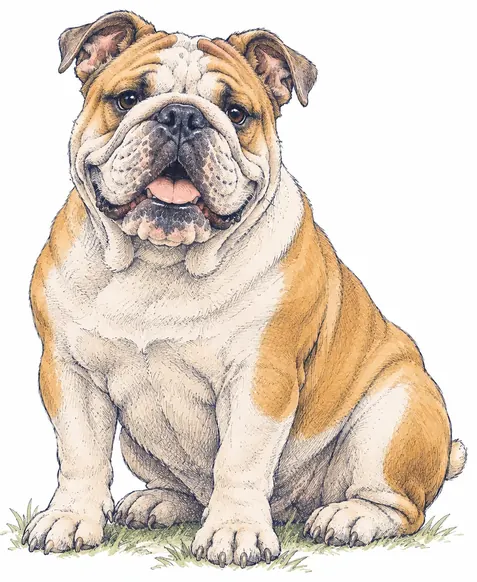 The Bulldog
A bull-baiting dog from England, now a gentle companion.
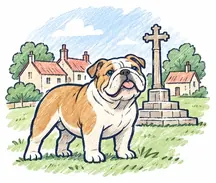
The Bulldog was bred in England to take part in bull-baiting, a cruel sport. After that sport was banned in 1835, breeders kept the dog but worked to make it calm and gentle.
- 1800sFirst bred in England
Bred to take part in bull-baiting, a cruel sport.
- 1835Bull-baiting banned
England bans bull-baiting, and the Bulldog loses its old job. Breeders later begin showing it and choosing gentler dogs.
- 1875The Bulldog Club
A new Bulldog Club forms in England and publishes a breed standard. An earlier club, formed in 1864, folded after about three years.
- 1886AKC recognizes it
Recognized by the American Kennel Club in 1886.
- 1889Handsome Dan
Yale student Andrew Graves gets a Bulldog named Handsome Dan. He becomes Yale's mascot, one of the first live college mascots.
- 1935UKC recognizes it
Recognized by the United Kennel Club in 1935.
- 1955Westminster winner
A Bulldog named Kippax Fearnought wins Best in Show at the Westminster dog show in New York.
- 1955FCI accepts the breed
Accepted by the FCI on 14 Mar 1955 (standard 149).
- TodayStill popular
Ranked #10 in the US.


Famous Bulldogs





Popular names
Bulldog Questions
Most asked: 6 of 12 questions
Not as a recognized breed. The American Kennel Club does not list a miniature Bulldog. Dogs sold as mini or miniature English Bulldogs are usually Bulldogs bred down in size or crosses. Ask the breeder for the parents' health records and the full pedigree.
See size and colorsBulldogs live about 9 years on average, shorter than many breeds. Lifespan varies from dog to dog, and keeping a healthy weight, keeping them cool and staying up to date on vet visits all help. See the health section for what vets watch for.
See health in detailBulldogs were bred in England for bull-baiting, a cruel sport that was banned in 1835. After the ban breeders kept the dog but chose calmer, gentler animals, and the modern Bulldog is a laid-back companion. Today they are bred purely as pets, and the old fighting job is long gone.
Read the historyA puppy from a breeder costs about $2,000 to $6,000 (rough asking prices), then about $139 a month to keep, or $1,670 a year. Over about 9 years that comes to roughly $16,000. Bulldogs often need extra vet care, so plan for that. Very low prices can mean health tests were skipped.
See the full costNo. No breed is aggressive by nature, and bite risk comes down to the individual dog, its breeding, training and supervision. Bulldogs were once bred for bull-baiting, but since it ended in 1835 breeders have chosen calm dogs. Some can be pushy with other dogs, so socialize early.
See temperamentSome. Bulldogs have a short smooth coat that sheds a moderate amount all year, and the hairs show up on clothes and furniture. A weekly brush helps. The facial folds also need regular cleaning and drying to avoid skin trouble.
See careMany cannot swim well. Bulldogs have heavy chests, short legs and flat faces, so most tire fast and struggle to keep their heads up. Stay within arm's reach near water, and put a well-fitted dog life jacket on them at a pool, lake or boat. They also overheat easily, so avoid hard exercise in the heat.
See health in detailAdults stand 14–15 in tall and weigh 45–55 lb, with males heavier than females. They are compact but very solid and stocky. Puppies fill out at different rates, and a Bulldog that is overweight puts more strain on its joints and breathing, so ask your vet what weight is right for your dog.
See size and colorsBulldogs learn steadily but are known for a stubborn streak. Libraries we checked score trainability a middle 3 out of 5, so use short, upbeat sessions with treats and plenty of patience. They are not high-energy dogs, which makes training time easier to fit in.
See temperamentNo. Bulldogs shed a moderate amount all year, so they are not a good pick for anyone with a dog allergy. No dog is truly allergy-free, because the allergens are in saliva and skin flakes as well as hair. If someone at home has allergies, spend time with the breed first.
See careOften yes, with supervision. Bulldogs are sturdy, patient and affectionate with their families, and libraries we checked score them 3.5 out of 5 with children. They are heavy and can be stubborn, so supervise play, and teach children to respect the dog's space and its need for rest.
Is a Bulldog right for you?Flat-faced breathing trouble is the big one. The short muzzle can make it hard to breathe, and Bulldogs overheat easily, so keep them cool and avoid hard exercise in the heat. Eye, skin-fold and joint problems are also common. Ask the breeder for health records for both parents, and ask your vet which checks suit your dog.
See health in detailNo question matchesTry another word, or look in the page sections above.
Where Our Bulldog Facts Come From
A vet will review this page. Their name will appear here once they have checked it.
Health information here is general and does not replace a visit to your own vet.
Showing 8 of 41 sources · 12 with an open license
Cite only (© American Kennel Club). We quote facts and link back. We don’t copy their text. Published (date not shown, read in 2026). We used it in Quick answers.
Open the sourceCite only (© The Royal Kennel Club). We quote facts and link back. We don’t copy their text. Published (date not shown, read in 2026). We used it in Quick answers.
Open the sourceCite only (© United Kennel Club). We quote facts and link back. We don’t copy their text. Published (date not shown, read in 2026). We used it in Quick answers.
Open the sourceCite only (© FCI / country of origin). We quote facts and link back. We don’t copy their text. Published (date not shown, read in 2026). We used it in Quick answers.
Open the sourceCite only (© Canadian Kennel Club). We quote facts and link back. We don’t copy their text. Published (date not shown, read in 2026). We used it in Quick answers.
Open the sourceOpen license (CC BY 4.0). Free to reuse with credit. Published in 2013. We used it in Quick answers and History.
Open the sourceCite only (© The Royal Kennel Club). We quote facts and link back. We don’t copy their text. Published (date not shown, read in 2026). We used it in Quick answers and History.
Open the sourceCite only (American Kennel Club). We quote facts and link back. We don’t copy their text. Published in 2026. We used it in Quick answers and History.
Open the sourceCite only (© AKC). We quote facts and link back. We don’t copy their text. Published (date not shown, read in 2026). We used it in Quick answers.
Open the sourceOpen license (CC BY 4.0). Free to reuse with credit. Published in 2024. We used it in Quick answers.
Open the sourceOpen license (CC BY 4.0). Free to reuse with credit. Published in 2021. We used it in Health.
Open the sourceCite only (BVA copyright). We quote facts and link back. We don’t copy their text. Published in 2025. We used it in Health and Finding a puppy.
Open the sourceCite only (© The Royal Kennel Club). We quote facts and link back. We don’t copy their text. Published in 2026. We used it in Health.
Open the sourceCite only (OMIA). We quote facts and link back. We don’t copy their text. Published (date not shown, read in 2026). We used it in Health.
Open the sourceCite only (© The Royal Kennel Club). We quote facts and link back. We don’t copy their text. Published (date not shown, read in 2026). We used it in Health and Finding a puppy.
Open the sourceOpen license (CC BY). Free to reuse with credit. Published in 2021. We used it in Health.
Open the sourceOpen license (CC BY). Free to reuse with credit. Published in 2023. We used it in Health.
Open the sourceOpen license (CC BY). Free to reuse with credit. Published in 2025. We used it in Health.
Open the sourceOpen license (CC BY). Free to reuse with credit. Published in 2025. We used it in Health.
Open the sourceOpen license (CC BY). Free to reuse with credit. Published in 2025. We used it in Health.
Open the sourceOpen license (CC BY). Free to reuse with credit. Published in 2025. We used it in Health and Care.
Open the sourceOpen license (CC BY). Free to reuse with credit. Published in 2020. We used it in Health.
Open the sourceOpen license (CC BY 4.0). Free to reuse with credit. Published in 2017. We used it in Health.
Open the sourceCite only (© ASPCA). We quote facts and link back. We don’t copy their text. Published in 2021. We used it in Cost.
Open the sourceCite only (© NAPHIA). We quote facts and link back. We don’t copy their text. Published in 2026. We used it in Cost.
Open the sourceCite only (Breed parent club website). We quote facts and link back. We don’t copy their text. Published (date not shown, read in 2026). We used it in Finding a puppy.
Open the sourceCite only (© American Kennel Club). We quote facts and link back. We don’t copy their text. Published (date not shown, read in 2026). We used it in Finding a puppy.
Open the sourceOpen license (CC0). Free to reuse with credit. Published (date not shown, read in 2026). We used it in History.
Open the sourceCite only (© AVMA). We quote facts and link back. We don’t copy their text. Published in 2024. We used it in Cost.
Open the sourceCite only (© Petfood Industry). We quote facts and link back. We don’t copy their text. Published in 2026. We used it in Cost.
Open the sourceCite only (© AAHA). We quote facts and link back. We don’t copy their text. Published in 2021. We used it in Cost.
Open the sourceCite only (© Wag Labs). We quote facts and link back. We don’t copy their text. Published in 2026. We used it in Cost.
Open the sourceCite only (© Rover). We quote facts and link back. We don’t copy their text. Published in 2024. We used it in Cost.
Open the sourceCite only (© CareCredit). We quote facts and link back. We don’t copy their text. Published in 2025. We used it in Cost.
Open the sourceCite only (retail prices, read in Nov 2026). We quote facts and link back. We don’t copy their text. Prices read in 2026. We used it in Cost.
Open the sourceCite only (© City of Seattle). We quote facts and link back. We don’t copy their text. Read in 2026. We used it in Cost.
Open the sourceCite only (© Clatsop County). We quote facts and link back. We don’t copy their text. Read in 2026. We used it in Cost.
Open the sourceCite only (© City and County of Denver). We quote facts and link back. We don’t copy their text. Read in 2026. We used it in Cost.
Open the sourceCite only (© Maricopa County). We quote facts and link back. We don’t copy their text. Read in 2026. We used it in Cost.
Open the sourceCite only (© City of Austin). We quote facts and link back. We don’t copy their text. Read in 2026. We used it in Cost.
Open the sourceCite only (© Miami-Dade County). We quote facts and link back. We don’t copy their text. Read in 2026. We used it in Cost.
Open the sourcePhoto credits are listed under Photos.